3 Practical Ways to Improve Your Brand’s AI Discoverability
If you’re a marketer and you’re trying to sort through all of this AIO, SEO, GEO, AEO, ee aye ee aye oh, then don’t worry. It’s the wild west out here, and we’re all trying to figure it out, especially those of us on small but mighty teams. I’ll share three actionable steps small marketing teams can take immediately to improve AI discovery across LLMs like ChatGPT, Perplexity, Google AI Overviews, and more. It’ll cover:
Creating a TL;DR section AI crawlers can quickly scan before getting through your entire blog and/or webpage.
Adding an FAQ section at the end of your blogs and webpages to give AI more context and connect your content to more queries.
Requesting Google Reviews from your best and favorite customers.
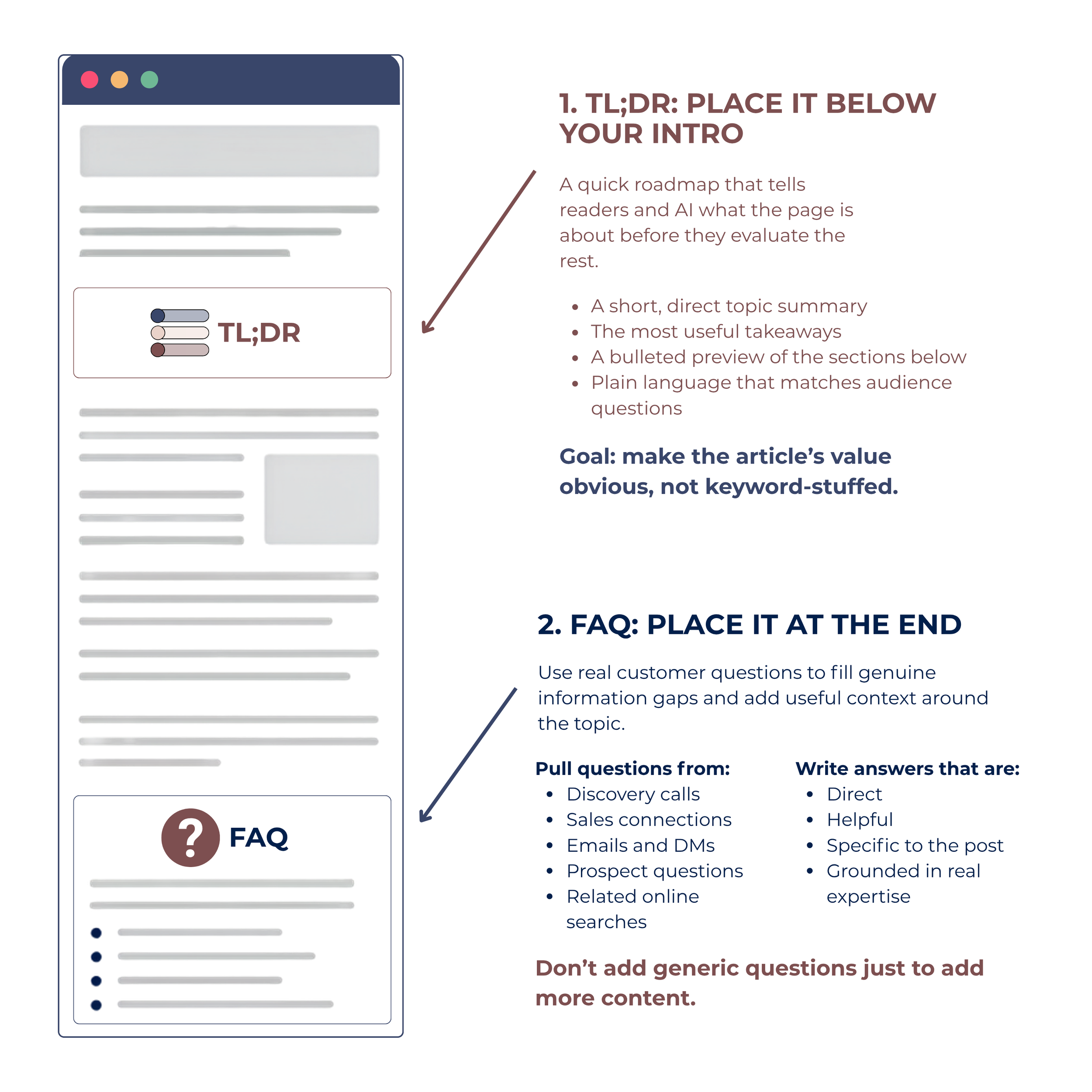
Add a TL;DR/Key Takeaways/Article Summary Section
From what I can tell, there is no industry-standard term for this section, so I picked three. Each webpage needs to have this following the introduction or in place of it. This section contains all the details and information your page covers, but summarized. The reason for this comes from a webinar I attended on Building AEO Systems that Scale. In this conversation, Kevin Indig and Guy Yalif discuss methods and approaches to being cited by AI.
One of the most interesting takeaways I got from the webinar was how AI actually searches and parses information and how front-loading content for blogs, resource pages, and learning center articles can benefit their discoverability in AI search.
This is a pretty simple update to the traditional formatting approaches for SEO, and I think it’s an easy step for brands to implement on their own.
Implement an FAQ Section
Another great implementation is to include FAQs at the bottom of your product pages (and this part is equally as important as what I didn’t mention in my video) and to also include schema markup. Once the team at Webflow implemented this with six of their top product pages, within two weeks, more than 57% of new citations came from the AI search.
This is not a difficult step, but it does take some curiosity and initiative if you’re not a marketer with web dev experience. Personally, I’m gonna find the answers online. There are many articles and tutorials out there. Otherwise, team up with your friendly, neighborhood web developer to help you implement this.
Request Google Reviews
Another really important step to this is knowing that AI doesn’t just trust content you or your brand publishes. It’s always looking for third-party validation through forums, social media, and reviews. The best thing you can do to supercharge your efforts is to request Google Reviews from your best and brightest customers. Double points if they’re willing to create a testimonial video for you to share on social media. And DOUBLE bonus points if they post about it on their own channels and tag your brand.
If you’re looking for a template to use, go ahead and grab the one I have available, along with all my other freebies, in my marketing toolkit.
A Very Good Place to Start
There’s so much more to share, but for now this will get you off to a great start.
As always, my inbox is open. If you’re looking for actionable insights like these delivered straight to your inbox, be sure to sign up for my newsletter.